Good Design Is No Accident: Minor Tweaks for Major Leaps!
At Coburg Consultants, we believe that intuitive and clean design not only appeals aesthetically but also encourages users to return. With our usability evaluations, we help you test, prioritize, and discover a better digital presence that converts. Our approach ensures that your platforms are not only functional but also user-friendly, inviting, and effective in retaining and satisfying your users.
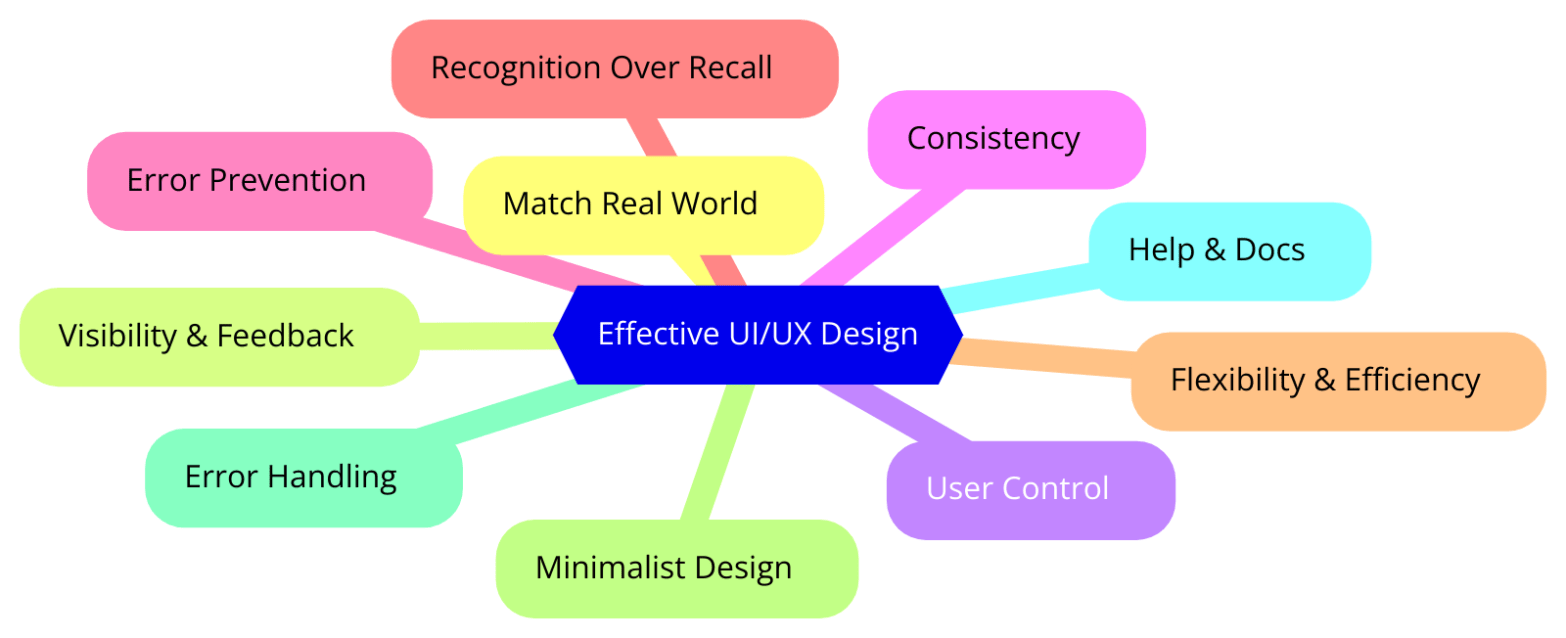
Core Principles of Effective UI/UX Design:
| Principle | Description |
|---|---|
| Match Between System and the Real World | Ensure that the system speaks the users’ language, with words, phrases, and concepts familiar to the user, rather than system-oriented terms. Follow real-world conventions, making information appear in a natural and logical order. |
| Visibility of System Status | Keep users informed about what is going on through appropriate feedback within a reasonable time. |
| User Control and Freedom | Users often choose system functions by mistake and will need a clearly marked “emergency exit” to leave the unwanted state without having to go through an extended dialogue. Support undo and redo. |
| Consistency and Standards | Users should not have to wonder whether different words, situations, or actions mean the same thing. Follow platform conventions. |
| Error Prevention | Even better than good error messages is a careful design that prevents a problem from occurring in the first place. Either eliminate error-prone conditions or check for them and present users with a confirmation option before they commit to the action. |
| Recognition Rather Than Recall | Minimize the user’s memory load by making objects, actions, and options visible. The user should not have to remember information from one part of the dialogue to another. Instructions for use of the system should be visible or easily retrievable whenever appropriate. |
| Flexibility and Efficiency of Use | Accelerators — unseen by the novice user — may often speed up the interaction for the expert user such that the system can cater to both inexperienced and experienced users. Allow users to tailor frequent actions. |
| Aesthetic and Minimalist Design | Dialogues should not contain information that is irrelevant or rarely needed. Every extra unit of information in a dialogue competes with the relevant units of information and diminishes their relative visibility. |
| Help Users Diagnose and Recover from Errors | Error messages should be expressed in plain language (no codes), precisely indicate the problem, and constructively suggest a solution. |
| Help and Documentation | Even though it is better if the system can be used without documentation, it may be necessary to provide help and documentation. Any such information should be easy to search, focused on the user’s task, list concrete steps to be taken, and not be too large. |

 Coburg Consultants